
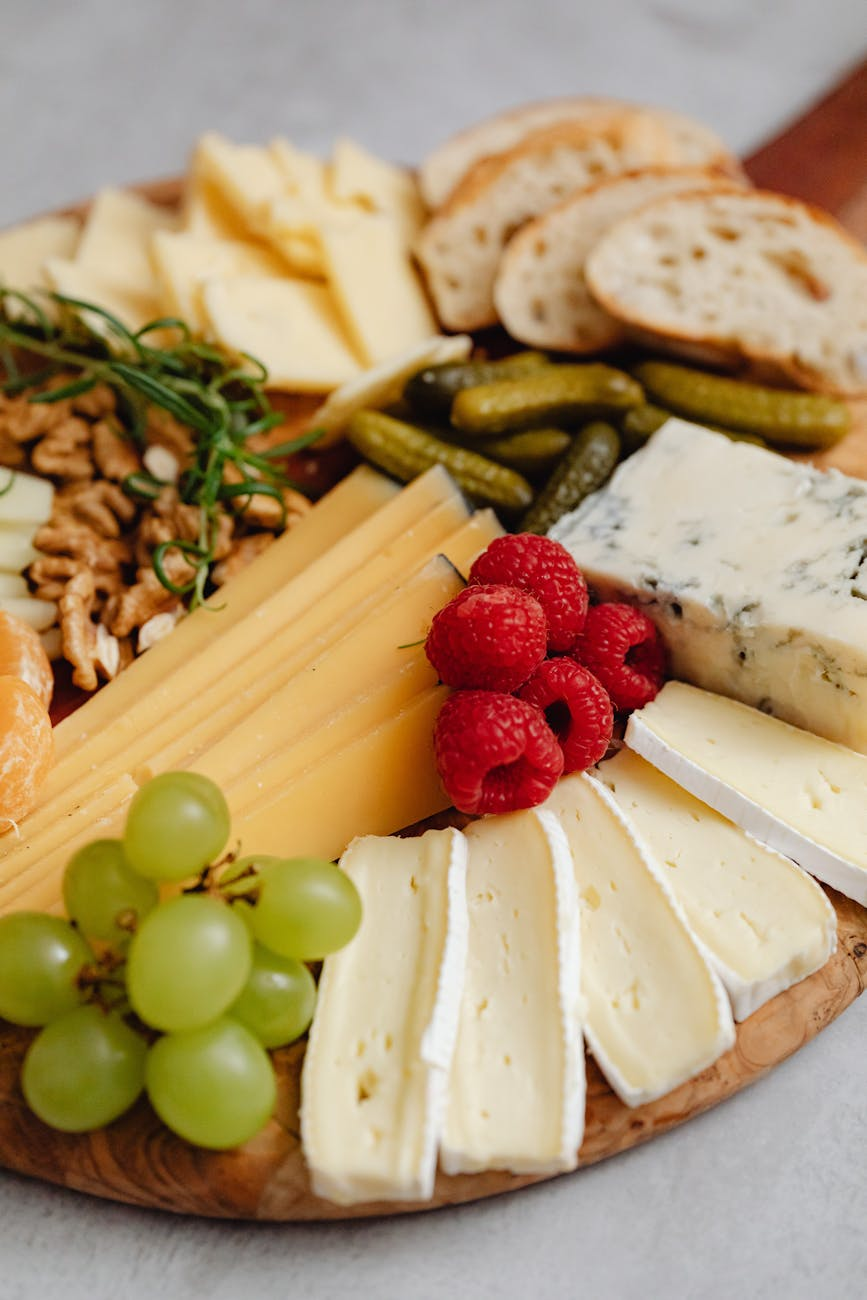
With the holidays right around the corner many of us will be hosting friends & family in our homes. A charcuterie board is an excellent way to serve a large crowd with little prep & no cooking!
Charcuterie is a French term for preparing cooked meats like pate & Salume is an Italian term for salted and cured uncooked meats like salami and prosciutto. Today the terms are used interchangeably to describe the meats added to cheese boards but also to describe all of the contents on the board. If you are wondering how to pronounce the term it is “Shaar-koo-tr-ee”
Here are some Charcuterie Board basics…
- The board should have a variety of flavors and textures which will allow for a wide variety of pairing and combinations.
- To create visual interest place meats and cheeses in different areas, break up similar shaped and sized items throughout the board, and have different textures throughout.
- Slice the cheese, fold the meats, stack the crackers, and add small bowls of different elements throughout.
- Note: Color will also create visual interest. You can add accents with fresh flowers or herbs. Edible flowers include; calendula, lavender, lilac, marigold, nasturtium, pansy, peony, roses, sunflowers, and zinnia. There are many more but these are the most readily available.
- Slice the cheese, fold the meats, stack the crackers, and add small bowls of different elements throughout.
- Use a large cutting board or serving platter for your board. Have the same item on the board in multiple different places for easy access.
- Have a combination of savory and sweet flavors on your Charcuterie board. For example, a creamy Brie on top of a crunchy cracker with a slightly sweet fig spread.
- Plan to have 2-3 oz of meat and 2 oz of cheese per person
Key Components to Every Charcuterie Board
- Cheese
- There six categories of cheese: fresh, bloomy rind, blue, semi hard, hard & washed rind and three primary types of milk which are cow, goat & sheep.
- Fresh: Mozzerella, goat cheese, mascarpone
- Bloomy Rind: Brie, Camembert
- Blue: Stilton, Gorgonzola, Roquefort
- Semihard: Gouda, cheddar, havarti, Gruyère
- Hard: Parmigiana-Reggiano, Pecorino Romano
- Washed Rind: Taleggio, Limburger, Epoisses
- Remember to have 2 oz of cheese per guest
- Meat
- Here are some popular meat options to include on your Charcuterie board.
- Salami is an Italian cured sausage made with ground pork. Salami varieties include Genoa, sopressata, pepperoni, chorizo.
- Prosciutto is uncooked dry cured ham that is washed, seasoned, and dry aged for up to three years.
- Capicola is a Traditional Italian dry-cured pork that is seasoned with red wine, garlic, and a variety of herbs and spices before it is salted, stuffed into a casing, and then cured for up to 6 months.
- Have 2-3 oz of meat per person
- Fruit like grapes, apple slices, plums, berries, dates, and dried figs & apricots. Around the holidays it is fun to included sugared cranberries which are very easy to make.
- Bring 1 cup of sugar and 1 cup of water to a boil to make a simple syrup. Add 3 cups of fresh cranberries to the simple syrup and let soak for 10-15 minutes, mix a few times throughout to make sure all of the cranberries are covered. Strain the cranberries and let them dry in a single layer on parchment for at least one hour. Sprinkle sugar over the top and store in an airtight container in the refrigerator. Add more sugar as needed.
- A variety of nuts which could include candied pecans, Marcona almonds , cashews, pistachios, or a spiced nut mix.
- Herbs like rosemary, thyme, and sage are all delicious choices. These make great accents too!
- Spreads or dips such as pesto, hummus, roasted red pepper, mustard, Boursin, hot pepper jelly, honey, caramelized onion jam or my personal favorite, fig spread.
- You should have at least 3-4 different varieties of crackers that have different flavors and textures. This could include water crackers, whole grain crackers, crisps, pretzels, cheese twists, bagel rounds or flatbreads.
- Vegetables – Carrots, cucumbers, zucchini, bell peppers, radishes and sugar snap peas.
- Olives & pickles are popular additions well.
Helpful Charcuterie Board Tools
- Honey dipper
- Cheese slicing cutting board & cheese knives
- Cutting boards that are wood are my personal favorite
- Bowls and vessels for jam, honey, spreads & dips
- Spreaders for soft cheeses
- A fork to hold hard cheeses in place while cutting
- Pronged knife to slice through soft and semihard cheese
- Flat knives used to cut, slice, and chisel a variety of cheeses
- Toothpicks for placing a variety of items on their plate
As you can tell there are a lot of options to create a custom and delicious charcuterie board that will appeal to a wide variety of tastes. There really is no right or wrong way to assemble your board – have fun and be creative with it! As an example, below is a charcuterie board I made with my sister-in-law for my husband’s 50th birthday.

P.S. You may be wondering what is the difference between a charcuterie and a crudite? A crudite “kroo duh tee” is an appetizer of assorted raw vegetables usually served with a dip or sauce. I like to serve a crudite at the peak of harvest season to include homegrown cherry tomatoes, sugar snap peas, zucchini & cucumbers, etc. Stay tuned for a post during our harvest season on how to make a crudite!